Designing a real-time cyber security decision engine for BT Group’s Leadership
Product Design
Enterprise UX
Data Visualisation
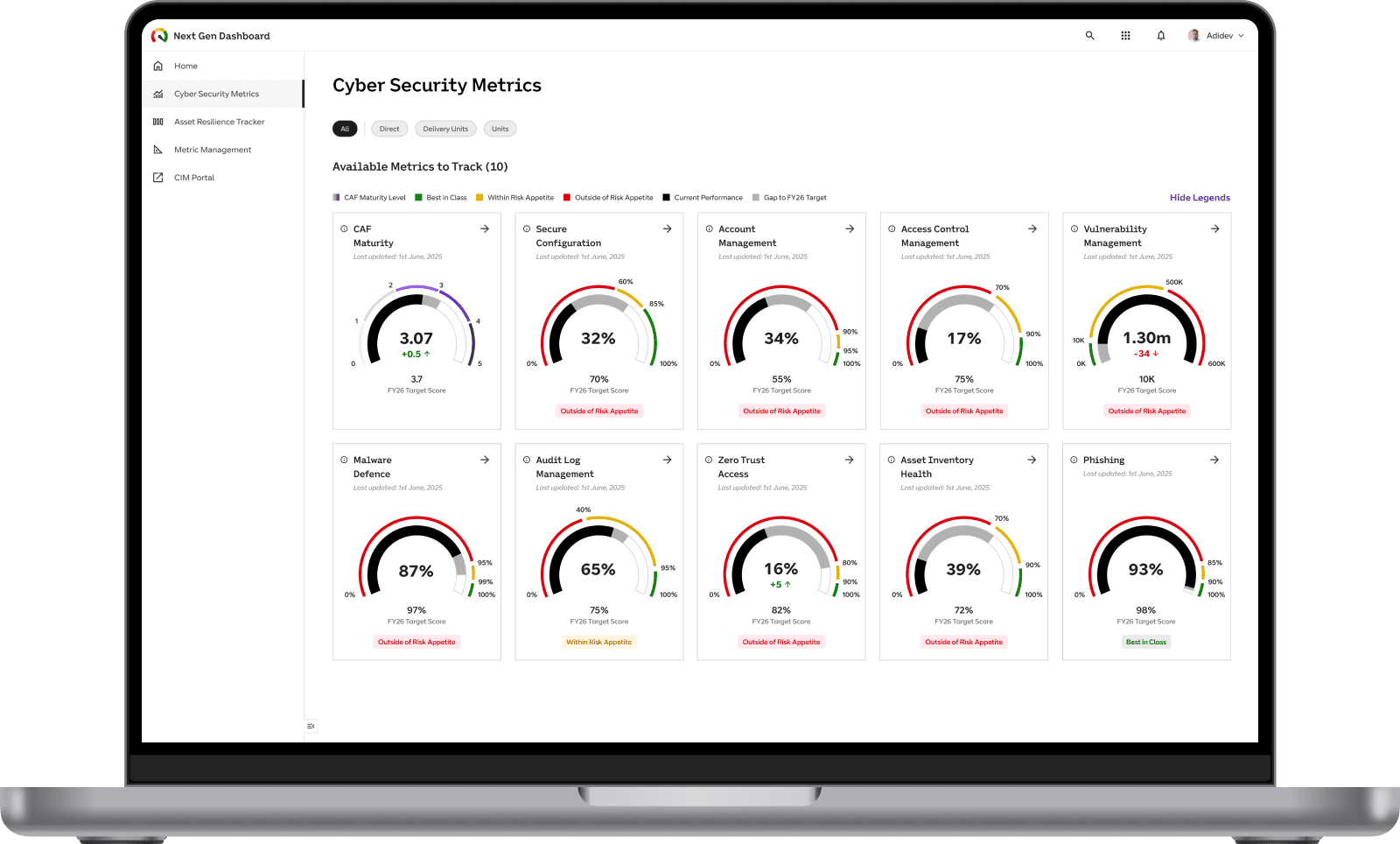
The gist: TL;DR
I spearheaded the design of a Next Gen Dashboard solution at BT Group to eliminate an entire week’s manual Excel reporting and deploy a real-time decision-making platform. One of the biggest aha moments in this solution was the design of Filter Sets to accommodate the intricate organisational structure of BT. This solution not only enabled the elimination of reporting latency but changed the dynamics of the leadership team’s perspective from reactive to proactive risk management via Future Projections.
The challenge: Escaping the “One-Week Report”
British Telecom (BT Group) was drowning in cybersecurity data, but their process for tracking compliance was seriously flawed. The key stakeholders had to turn to a process of compiling leads into Excel sheets, taking a full week every month. This introduced a tremendous delay, where key "Red" alerts were already days old before they reached the Board, making it a ripe ground for human errors.
My Role
I was tasked with designing the high-level executive dashboard using a strict 'Traffic Light' system, architecting a scalable 'Filter Sets' workflow to handle deep organisational hierarchies, and creating detailed drill-down analytics that combine real-time trends with future projections.
Team
1 Product Design Lead, 1 Product Designer,
1 UX Researcher and 1 Product Owner
Timeline
July 2025 - September 2025
At a Glance Clarity
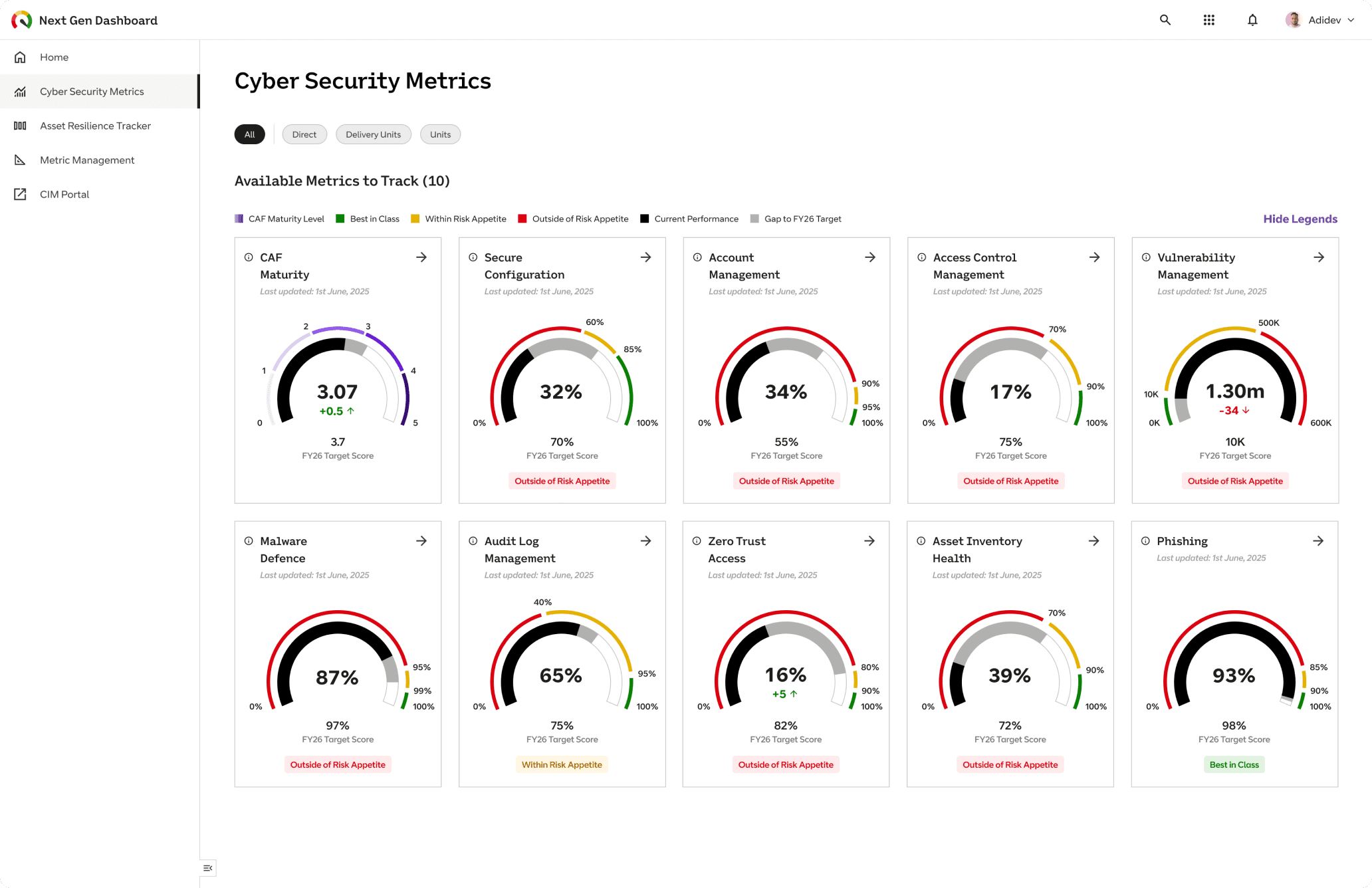
To add value from the outset, we concentrated the first build on a shortlist of 10 key Cyber Security metrics (Malware Defence, Phishing, etc.). The leadership landing page was built to be self-explanatory, using a strict Red Amber Green system to enable leaders to assess Risk Appetite in an instant.
Architecture for Scale: The "Filter Sets"
Organising BT’s complex structure over 4 levels, conventional dropdown menus would not suffice—the volume of their dataset would not be organized effectively. In this case, the challenge was addressed using Sets workflow, which is actually a side panel feature that provides analysts with sophisticated tools to organise complex filters without loading the main page.
From Status to Strategy
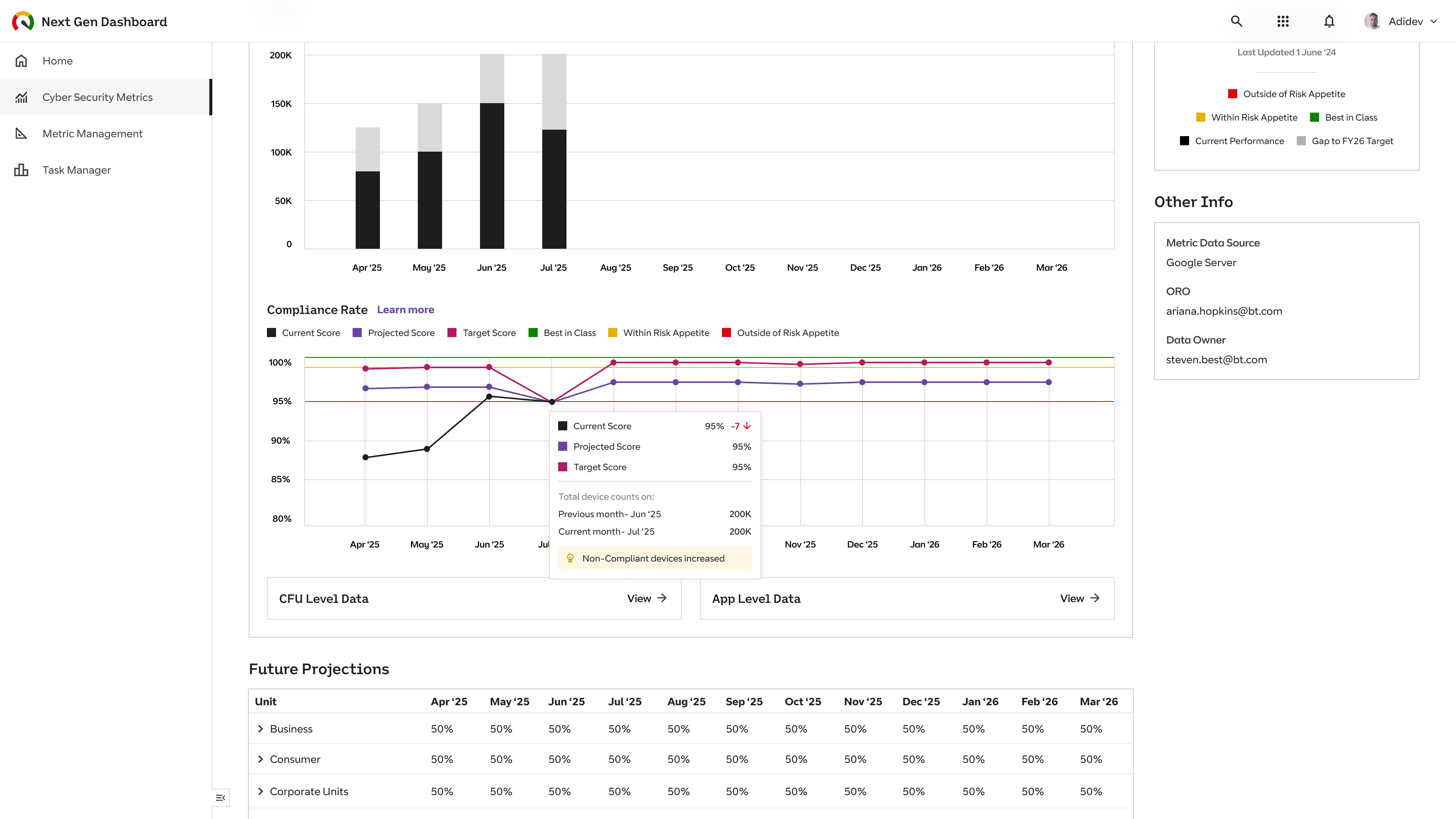
Simply point out a trouble spot without offering any specifics doesn't cut it—I built the Drill Down page to answer the very first and most pressing question: We are failing—why? I plotted the compliance rates and volume of assets together and incorporated the Future Projections to enable leadership to prepare ahead of time to meet a goal such as FY26.
Actionable Accountability
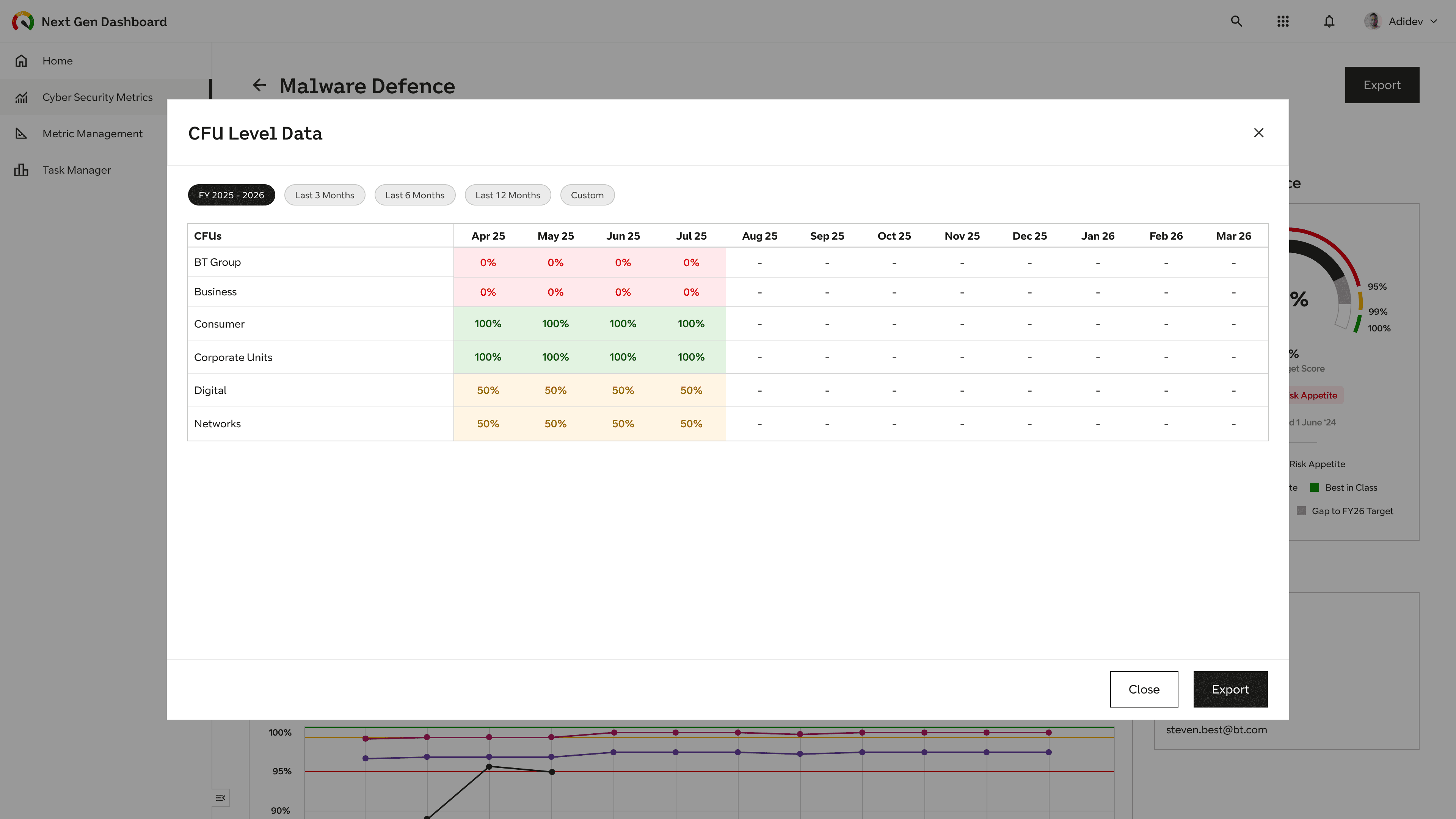
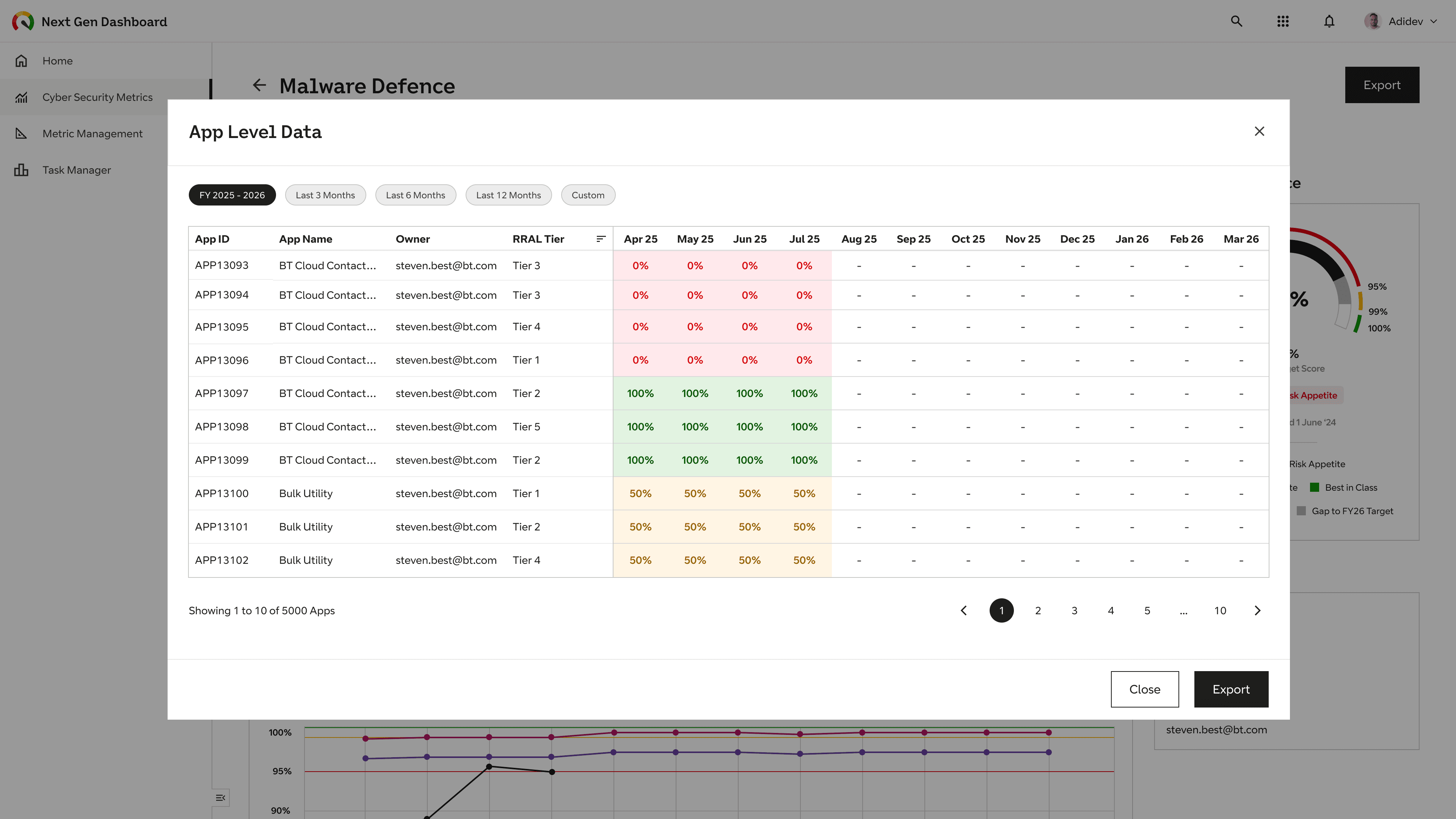
In order to keep the clean, executive-level analysis view, Progressive Disclosure had to be used. Data detail tables are purposefully kept out of sight under modal overlay panels, allowing the user to focus on the App Owners behind the risk without leaving the overall analysis perspective.
Final Results & Strategic Impact
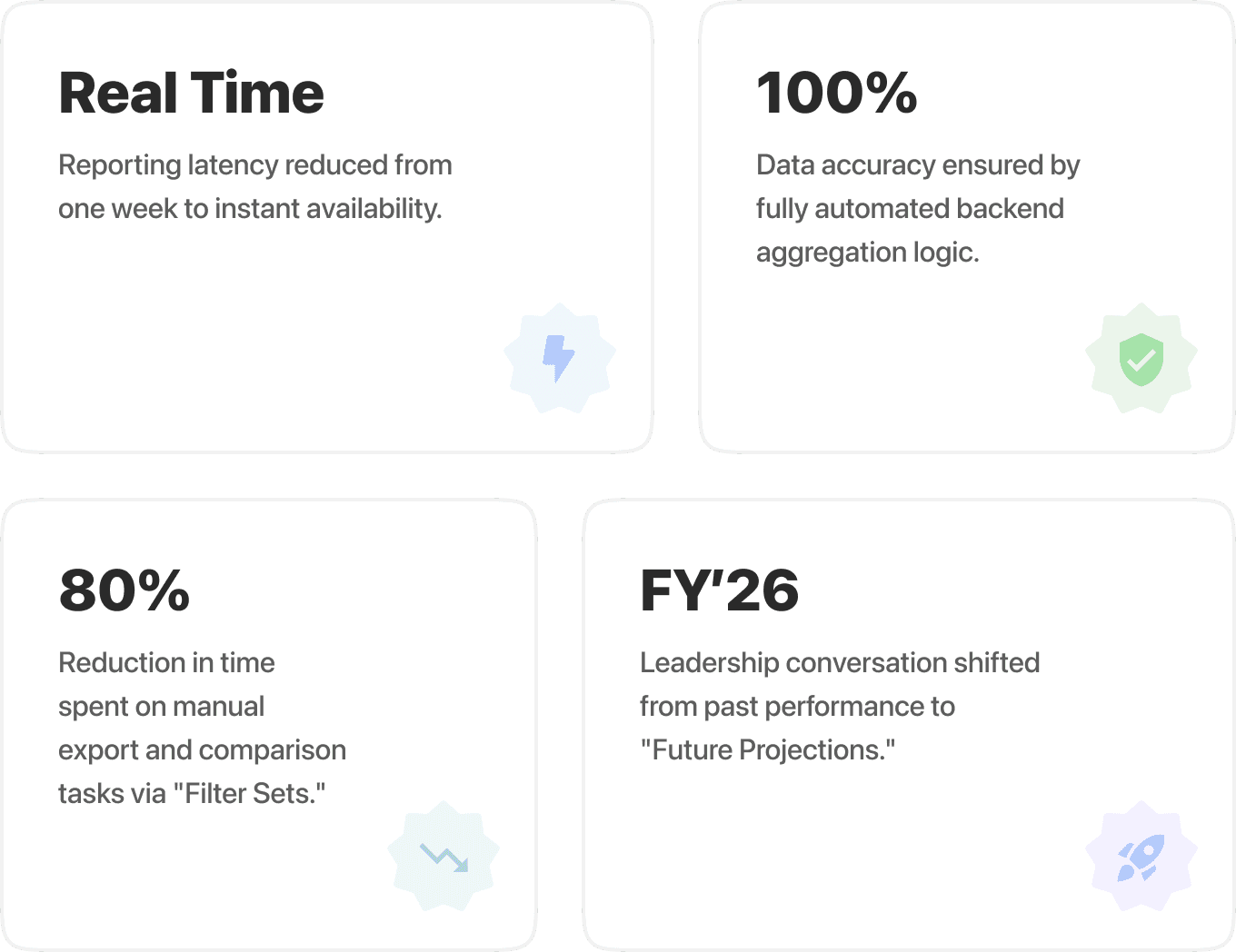
The Next Gen Dashboard facilitated an end to a highly fractioned and manual process and has made it very efficient.
Got a project in mind? or you can just say a “hello”
Let’s Connect
dbadidev@gmail.com
Designed and built on Earth by Adidev © 2025
Back to top