Crafting CompliCheck to help architects love design and compliance again
Product Design
Design & Compliance Tool
SaaS
The gist: TL;DR
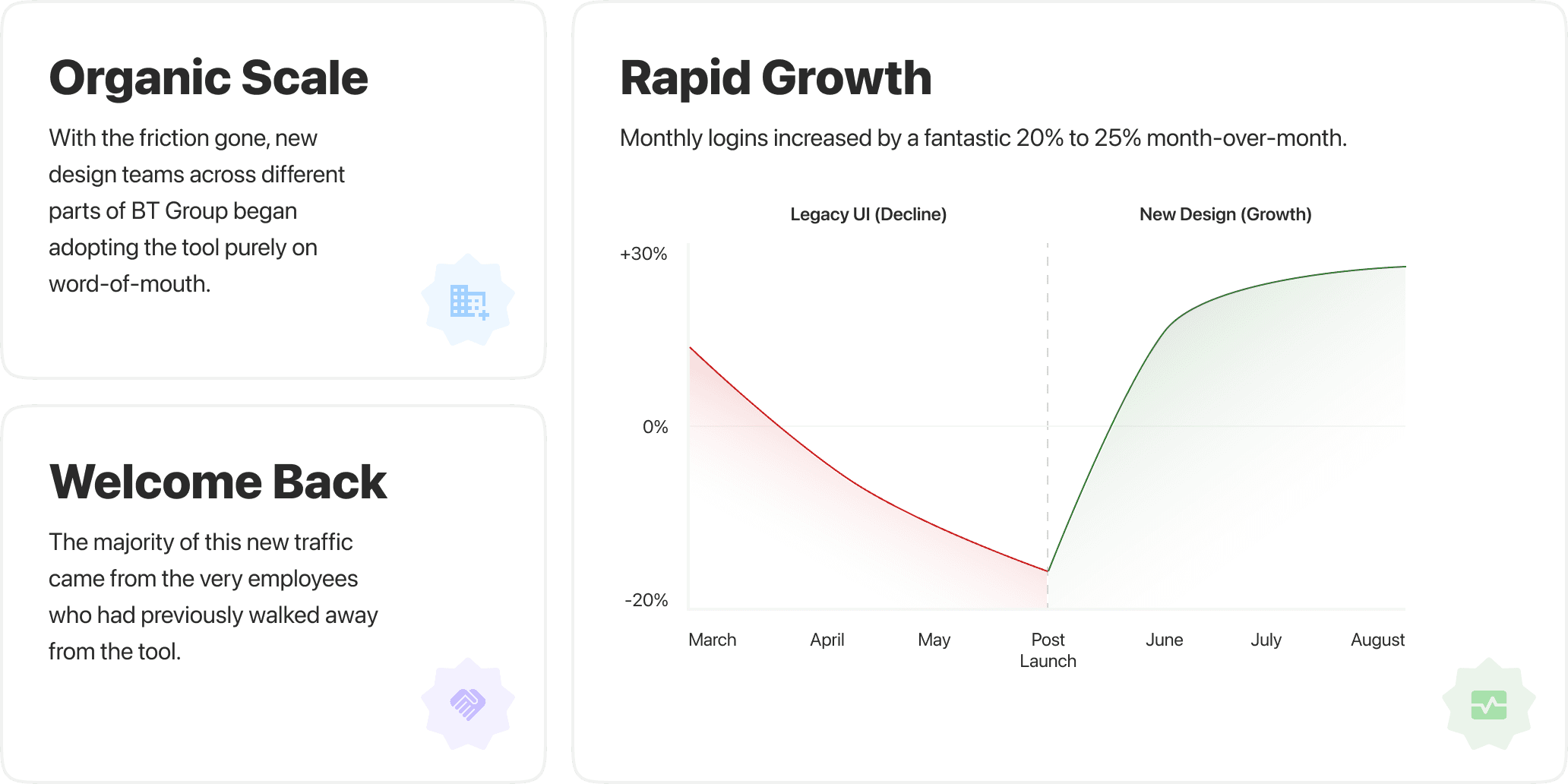
Crafting the internal BT Group’s design compliance engine, turning a 10-15% decrease in users per month into a 20-25% MoM gain. Through the shift in the overall product approach from policing to design help, I upgraded a sophisticated audit solution into a user-friendly copilot that performs data entry automatically.
The real challenge: The 'innovation tax'
Crafting the internal BT Group’s design compliance engine, turning a 10-15% decrease in users per month into a 20-25% MoM gain. Through the shift in the overall product approach from policing to design help, I upgraded a sophisticated audit solution into a user-friendly copilot that performs data entry automatically.
The Retreat
A 10–15% abandonment rate month over month as architects reverted back to manual processes to get away from the tool friction.
The Black Box
The workflow was not transparent; at the beginning, users suffered from Blank Canvas anxiety and at the end from "Black Box" validation-which indicated mistakes without showing how to correct them.
The shift: Our Promise to Our Users
Assistance, Not Policing. We understood our original task was not to correct errors, but to assist our architects in succeeding. We rebuilt our whole product with a natural and human flow in mind: Get Started → Check My Work → Publish. We offered a strategy of guidance rather than judgment, and a way to ensure compliance through speed.
My Role
My task was to collaborate with Product Owners, Solution Architects, and UX Researchers to better comprehend the pain points causing adoption rates to fall and use insights gained to create a smooth and automated process for compliance.
Team
1 Product Design Lead, 1 Product Designer,
1 UX Researcher and 1 Product Owner
Timeline
February 2025 - April 2025
Workflow 1: A Hand to Hold (Intelligent Ingestion)
The Goal
Eliminate the anxiety of starting from scratch. We identified that the first click was where we lost most users. Our solution was to automate the hard parts and set clear expectations.
A Clear Road Map
We replaced the homepage with a simple 3-Step Mental Model right on the landing page. The user in an instant could perceive how to go from A to Z.
We do the heavy lifting
Instead of having them manually enter a bunch of data, the system now takes in the HLSD and auto-fills 80% of the needed details (such as Project Name and Scope). By immediately opening the Details Panel to review it quickly, we introduce a critical trust but verify moment before they begin visual design.
Workflow 2: The Co-Pilot (Automated Gap Analysis & Remediation)
The Goal
To make fixing a fault a "one click fix". The former system required the user to sift through a manual/learn more/knowledge base to comprehend and troubleshoot mistakes. CompliCheck: It’s not just an escrow tool. It’s a true design copilot.
Error, Context, Solution
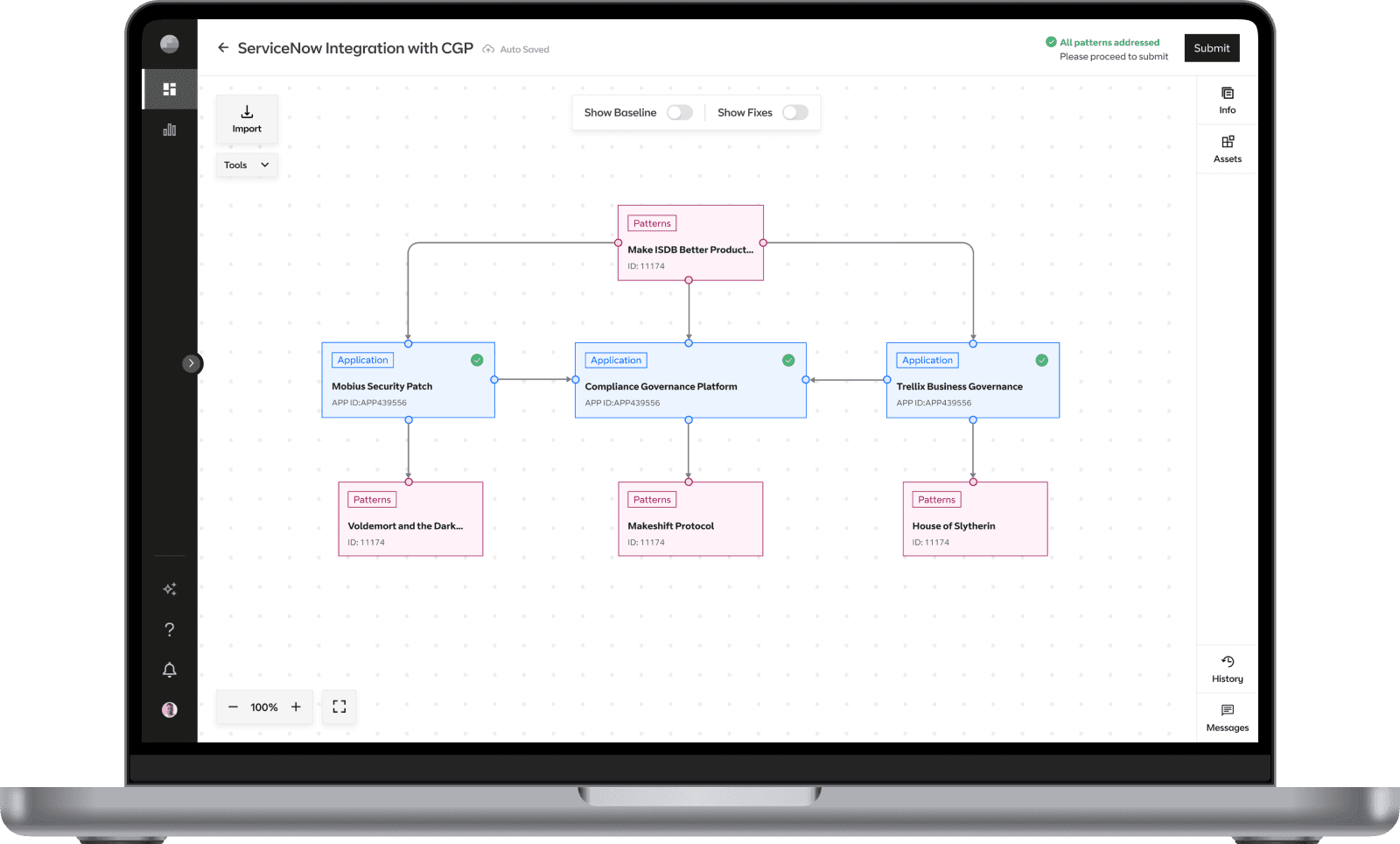
We introduced the solution of the compliance check right on the design canvas. This way, the system points to the actual component with an indicator, which highlights the issue immediately.
Smart Fixes
When an architect clicks the side panel open, they get a clear view of the security controls in which they are deficient ("Baseline Patterns"). By one click of confidence, the system implements the approved fix, turning a difficult procedure into a simple operation, represented by a green checkmark.
Trust and Autonomy
Of course, our own rules aren't infallible. The architects can decide to "Ignore" a pattern. The system provides a way to hold a architect accountable with a mandatory justification.
Final Results & Strategic Impact
The redesign immediately healed the relationship with our architects. During the pre-production phase, the shift in behaviour was undeniable
Got a project in mind? or you can just say a “hello”
Let’s Connect
dbadidev@gmail.com
Designed and built on Earth by Adidev © 2025
Back to top